
Description
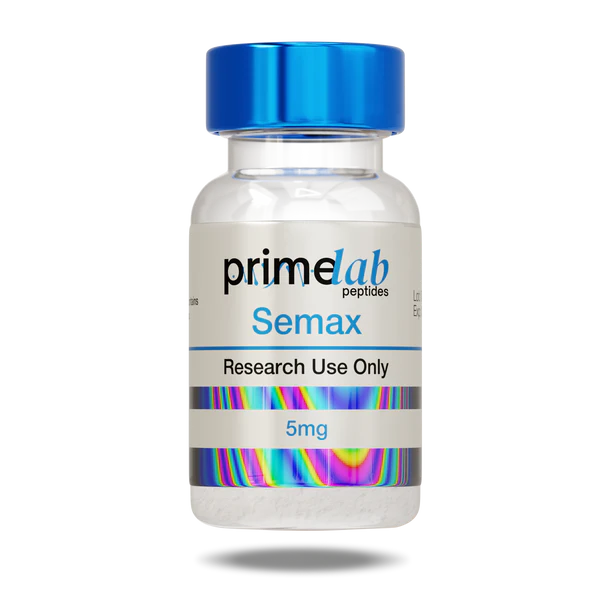
Semax 5mg: Benefits, Uses, Research & Complete Guide
Semax 5mg is a synthetic nootropic peptide originally developed in Russia from a modified fragment of adrenocorticotropic hormone (ACTH). It has been studied for its potential effects on cognitive function, neuroprotection, memory, attention, and recovery following certain neurological conditions. While Semax has been used clinically in Russia for specific indications, it is not approved by the U.S. FDA and remains investigational in many other countries.
This guide explains what Semax is, how it works, current research, storage recommendations, and important safety information.
What Is Semax?
Semax is a synthetic heptapeptide derived from the ACTH (4–10) fragment with modifications that improve its stability and biological activity. Unlike ACTH itself, Semax does not produce the same hormonal effects and has primarily been investigated for neurological and cognitive applications.
Package Contents
A typical Semax 5mg package generally includes:
- 1 lyophilized (freeze-dried) vial
- 5mg of Semax peptide
- Protective packaging
- Product labeling and batch information (manufacturer dependent)
How Does Semax Work?
Research suggests that Semax may influence several pathways involved in brain function.
Potential mechanisms include:
- Supporting brain-derived neurotrophic factor (BDNF) activity
- Influencing neurotransmitter systems such as dopamine and serotonin
- Supporting neuronal communication and neuroprotection in experimental settings
- Being investigated for cognitive performance and neurological recovery
Most evidence outside Russia remains limited, and additional high-quality clinical trials are needed.
Potential Research Applications
Researchers continue to investigate Semax in areas including:
- Cognitive function
- Memory research
- Learning and attention
- Neuroprotection
- Stroke recovery research
- Traumatic brain injury research
- Optic nerve research
- Mental performance research
Many of these applications remain investigational and are not approved indications in many countries.
Why Is Semax Popular?
Semax has attracted interest because it differs from many traditional nootropics by being studied for its effects on neuroplasticity and brain function rather than acting as a stimulant. Although it has a long history of clinical use in Russia, Western clinical evidence remains limited, and its regulatory status differs across countries.
Storage Guidelines
For optimal storage:
- Store in a cool, dry place.
- Protect from direct sunlight.
- Avoid excessive heat and moisture.
- Follow the manufacturer’s storage recommendations.
- If reconstituted, store according to the manufacturer’s instructions.
Frequently Asked Questions
What is Semax?
Semax is a synthetic peptide originally developed in Russia and investigated for cognitive and neuroprotective applications.
Is Semax FDA approved?
No. Semax is not approved by the U.S. FDA and remains investigational in the United States, although it has been used clinically in Russia for certain neurological conditions.
What makes Semax different?
Semax primarily acts on neurological pathways and has been studied for cognitive support and neuroprotection rather than for growth hormone or metabolic effects.
Can Semax be used without medical supervision?
No. Investigational peptides should not be self-administered outside appropriate medical or research settings.
Important Safety Information
Semax is not approved for routine clinical use in many countries. Individuals should not self-administer investigational peptides without guidance from a qualified healthcare professional. Safety, effectiveness, and regulatory status vary by jurisdiction.
Final Thoughts
Semax 5mg is a unique nootropic peptide that continues to be studied for its potential effects on cognition and neurological health. Although it has an established history of medical use in Russia, it remains investigational in many other regions. Anyone interested in Semax should rely on peer-reviewed scientific research, qualified healthcare professionals, and official regulatory guidance when evaluating this peptide.
Reviews
There are no reviews yet.