
Description
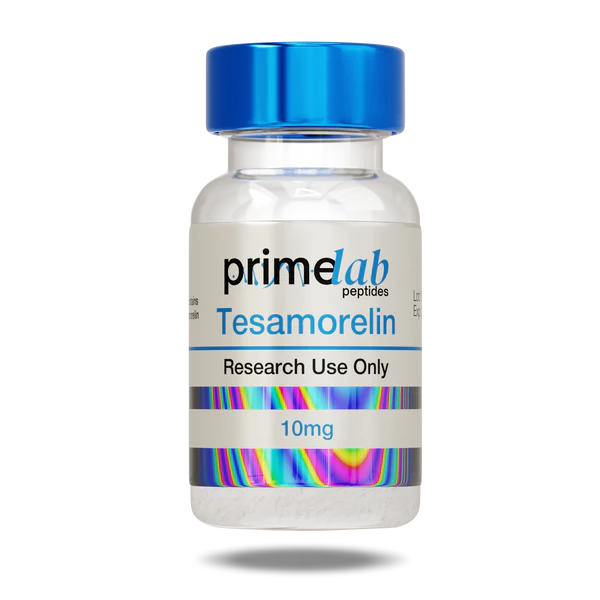
Tesamorelin 10mg: Benefits, Uses, Research & Complete Guide
Tesamorelin 10mg is a synthetic growth hormone-releasing hormone (GHRH) analogue that stimulates the body’s natural production of growth hormone. It is best known as the active ingredient in the prescription medicine Egrifta®, which is approved in the United States to reduce excess abdominal fat in adults with HIV-associated lipodystrophy. It is not approved as a general weight-loss medication.
This guide explains what Tesamorelin is, how it works, its approved medical use, ongoing research, storage recommendations, and important safety considerations.
What Is Tesamorelin?
Tesamorelin is a synthetic peptide modeled after naturally occurring growth hormone-releasing hormone (GHRH). By binding to GHRH receptors in the pituitary gland, it stimulates the release of the body’s own growth hormone, leading to increased levels of insulin-like growth factor-1 (IGF-1).
Unlike growth hormone itself, Tesamorelin encourages the body to produce endogenous growth hormone rather than supplying it directly.
Package Contents
A typical Tesamorelin 10mg package generally includes:
- 1 lyophilized (freeze-dried) vial
- 10mg of Tesamorelin peptide
- Protective packaging
- Product labeling and batch information (manufacturer dependent)
How Does Tesamorelin Work?
Tesamorelin works by activating growth hormone-releasing hormone (GHRH) receptors in the pituitary gland.
Its effects include:
- Stimulating natural growth hormone secretion
- Increasing circulating IGF-1 levels
- Influencing lipid metabolism
- Reducing visceral abdominal fat in its approved clinical indication
Approved Medical Use
Tesamorelin has regulatory approval in the United States for reducing excess abdominal visceral fat in adults with HIV-associated lipodystrophy. It is not indicated for general weight-loss management, and its long-term cardiovascular benefits have not been established.
Potential Research Applications
Researchers continue to investigate Tesamorelin in areas such as:
- Growth hormone physiology
- Visceral fat metabolism
- Metabolic health
- Non-alcoholic fatty liver disease (NAFLD)
- Body composition research
- Healthy aging research
Many of these applications remain investigational.
Storage Guidelines
For optimal storage:
- Store according to the manufacturer’s instructions.
- Keep in a cool, dry place.
- Protect from direct sunlight.
- Avoid excessive heat and moisture.
- If reconstituted, follow the manufacturer’s recommended storage conditions.
Frequently Asked Questions
What is Tesamorelin?
Tesamorelin is a synthetic growth hormone-releasing hormone analogue that stimulates the body’s natural release of growth hormone.
Is Tesamorelin FDA approved?
Yes. Tesamorelin is FDA-approved for reducing excess abdominal fat in adults with HIV-associated lipodystrophy. It is not approved as a general treatment for obesity or weight loss.
Is Tesamorelin the same as growth hormone?
No. Tesamorelin stimulates the body to produce its own growth hormone, whereas growth hormone therapy provides the hormone directly.
Can Tesamorelin be used without medical supervision?
No. Tesamorelin is a prescription medication and should only be used under the supervision of a qualified healthcare professional.
Important Safety Information
Tesamorelin should only be used as prescribed by a qualified healthcare professional. It may not be appropriate for everyone, and patients should discuss their medical history, current medications, and treatment goals with their healthcare provider before starting therapy.
Final Thoughts
Tesamorelin 10mg is a synthetic GHRH analogue with an established medical role in reducing excess visceral abdominal fat in adults with HIV-associated lipodystrophy. Ongoing research continues to explore its effects on metabolism and body composition, but many proposed uses remain investigational. For accurate and up-to-date information, rely on healthcare professionals, official prescribing information, and peer-reviewed scientific research.
Reviews
There are no reviews yet.